Introduction
Real estate assets can support community growth when they provide useful space for businesses, services, employment, and local activity. Commercial properties are not only investment holdings. They shape where people shop, work, gather, receive services, and move through a neighborhood. Thoughtful property investment can contribute to stronger local corridors and more convenient communities.
This does not mean every property owner is a developer or civic planner. It means that decisions about maintenance, tenant mix, access, design, and long-term asset strategy can affect more than a single balance sheet. When commercial real estate assets function well, they can support both investment goals and community usefulness.
Useful Space Helps Local Businesses Operate
Local businesses need appropriate space to serve customers and grow. Retail shops, service providers, medical offices, restaurants, professional firms, and neighborhood businesses all depend on properties that match their operational needs. A well-positioned commercial property can give businesses visibility, access, and a reliable place to build relationships with customers.
When property owners understand tenant needs, they can make decisions that support business activity. Clear access, maintained common areas, safe lighting, functional systems, and reasonable communication all matter. These practical details can help tenants focus on serving the community rather than fighting the building.
Tenant Mix Can Strengthen a Commercial Area
Tenant mix influences how a property contributes to its surroundings. A thoughtful mix can create convenience, shared customer traffic, and complementary uses. For example, a service business near food, retail, medical, or professional tenants may benefit from overlapping visits. A property with disconnected or poorly matched tenants may not create the same energy.
Tenant mix should also match local demand. A commercial center that serves actual neighborhood needs may become more resilient than one that only follows short-term trends. Investors should ask which businesses improve convenience, support daily activity, and fit the location. This connects to understanding location value in real estate investments, because location and tenant mix work together.
Access and Walkability Improve Usefulness
Access is a community issue as well as an investment issue. Properties that are easy to reach by car, foot, transit, or bicycle can serve more people. Good access can improve tenant demand and make a commercial area more useful to nearby residents and workers. Poor access can limit a property's contribution even when the building itself is sound.
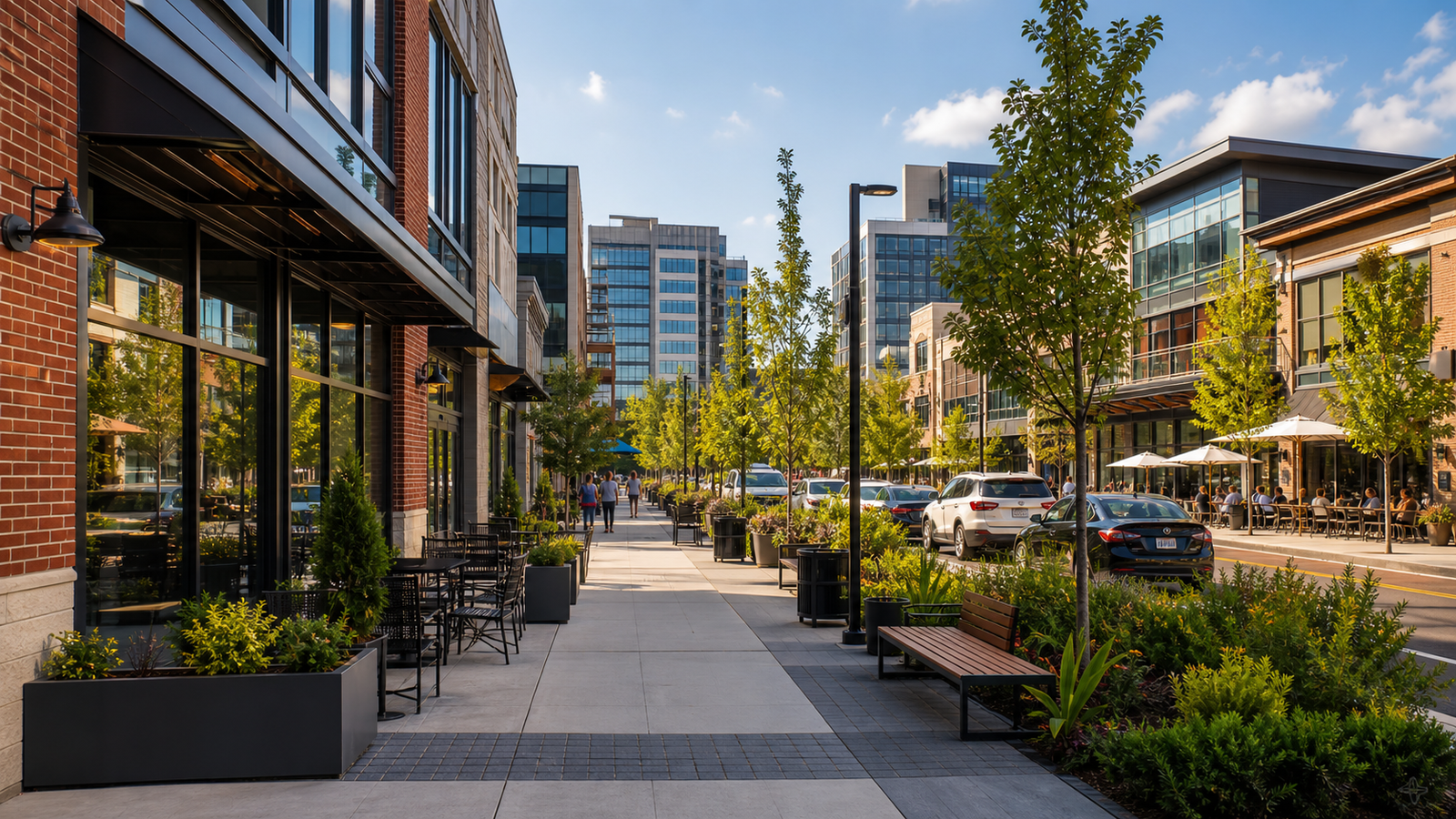
Walkability is especially important in mixed-use districts and neighborhood corridors. Sidewalks, lighting, safe crossings, clear entrances, and active storefronts can make a commercial property feel more connected to its environment. These details can support both local activity and long-term property value.
Maintenance Affects Community Perception
A well-maintained property can improve how a street or corridor feels. Clean landscaping, repaired surfaces, working lights, cared-for facades, and orderly common areas signal attention. Neglected properties can have the opposite effect, creating a sense of decline that affects neighboring businesses and public perception.
Maintenance also affects tenant confidence. Businesses may be more willing to invest in their own spaces when the property is cared for. Customers may feel more comfortable visiting. This is one reason property management and investment performance are connected to community growth. Good management supports the asset and the area around it.
Commercial Properties Can Support Jobs and Services
Commercial real estate assets provide the physical setting for jobs and services. Offices, retail centers, warehouses, medical buildings, and mixed-use properties allow businesses to operate. Those businesses employ people, pay local taxes, serve customers, and contribute to daily economic activity. The property itself may not create every job, but it helps make that activity possible.
This role is especially visible in corridors where small and mid-sized businesses depend on accessible space. A property that supports a strong group of tenants may contribute to local employment and convenience. Investors who understand this relationship may make better decisions about tenant mix and long-term positioning.
Thoughtful Improvements Can Lift a Corridor
Property improvements can affect more than one building. Updating a facade, improving lighting, repairing parking areas, adding landscaping, or reworking access can make a property more inviting. When several owners make responsible improvements, a corridor can feel more active and stable. This may attract tenants, customers, and additional investment.
Improvements should be practical and connected to local needs. A property does not need luxury design to support community growth. It may need reliability, clarity, safety, and spaces that local businesses can use. Investment should strengthen the property's role rather than chase appearance alone.
Long-Term Owners Can Provide Stability
Long-term property owners can support community growth by providing stable stewardship. They may understand local patterns, tenant histories, infrastructure issues, and neighborhood needs better than short-term holders. This knowledge can help them make decisions that support both the asset and the surrounding area.
Long-term thinking is explored further in why long-term thinking matters in real estate assets. Patient ownership can benefit communities when it is paired with maintenance, tenant support, and a willingness to adapt to changing needs.
Community Growth Can Also Support Investment Value
Community benefit and investment value are not always separate. A healthier commercial corridor can support stronger tenant demand, better occupancy, improved perception, and greater long-term property value. When local businesses succeed and customers visit regularly, properties may become more attractive to tenants and investors.
This does not mean every community-focused improvement produces immediate financial return. Some benefits are gradual. But commercial real estate assets operate within communities, and community strength often becomes part of the asset's market strength.
Responsible Investment Requires Listening
Investors who want properties to support community growth should listen to tenants, local businesses, customers, and public stakeholders. These groups can reveal practical needs that are not obvious from financial statements. They may point to parking problems, safety concerns, missing services, access barriers, or maintenance issues.
Listening does not mean every request can be met. It means decisions are informed by real use. A property that responds to actual needs is more likely to remain relevant. In that sense, community awareness is part of real estate asset strategy.
Questions for Connecting Real Estate Assets to Community Value
A useful article should leave readers with a way to think, not only a list of concepts. The following questions are the kinds of practical prompts that can help turn broad real estate investment planning into a clearer review process. They do not replace professional financial, legal, or tax advice, but they help frame the conversation before a decision becomes expensive or difficult to reverse.
Questions that clarify the investment picture
- Which local businesses or services does the property help support?
- How easy is the property to reach, enter, and use?
- Does the tenant mix reflect real neighborhood or corridor demand?
- Which maintenance or design improvements would improve public perception?
- How could long-term ownership decisions strengthen both the asset and the area?
The point of asking these questions is not to create a perfect forecast. Real estate assets are affected by tenant behavior, capital markets, local policy, construction costs, and countless small operational decisions. A disciplined review simply makes the assumptions visible. Once the assumptions are visible, investors and managers can test them against evidence instead of relying only on confidence or habit.
Signals worth reviewing over time
- Vacancies in spaces that once served important local needs
- Tenant concerns about access, safety, lighting, or maintenance
- A property appearance that weakens confidence in the corridor
- Changes in nearby population, employment, or traffic patterns
- Community feedback that points to practical barriers
Signals should be reviewed in context. A single vacancy, repair, or slow leasing period does not automatically mean that a property has become weak. The more important question is whether several signals are moving in the same direction. When occupancy, expenses, tenant satisfaction, and local demand all begin to shift together, the property may be telling investors that strategy needs to be revisited.
Community value should be evaluated with the same seriousness as financial value. When a property works better for its users and surroundings, it may also become a stronger long-term asset.
How Investors Can Align Property Decisions With Local Usefulness
Aligning property decisions with local usefulness begins with understanding who uses the asset and why. A commercial property may serve customers, employees, patients, vendors, residents, or visitors. Each user group experiences the property differently. Investors who understand these experiences can make decisions that support both tenant performance and community value.
One practical step is to review access from the user's perspective. Is the property easy to enter? Are sidewalks safe and clear? Is parking understandable? Are service entrances functional? Are deliveries manageable? Access problems can weaken both tenant success and community convenience. Improving access may be one of the most direct ways to strengthen a property.
Another step is to evaluate the tenant mix. A property that includes businesses serving real local needs may become part of daily routines. This can support tenant stability and customer traffic. Investors should consider whether the tenant mix creates convenience, complements nearby uses, and supports the identity of the corridor.
Property appearance also matters. A clean, maintained, well-lit building can communicate stability. It can encourage tenant confidence and improve the surrounding streetscape. This does not require expensive design gestures. Basic care, clear entrances, healthy landscaping, and repaired surfaces can make a meaningful difference.
Investors can also coordinate with local plans when appropriate. Public infrastructure, zoning updates, streetscape improvements, and nearby development may affect how a property should evolve. Owners who pay attention to these changes may make better long-term decisions and avoid treating the property as isolated from its environment.
Community usefulness should be balanced with financial discipline. A property still needs income, reserves, maintenance, and risk management. The strongest alignment occurs when improvements help users and also support the asset's investment role. Examples include better lighting, improved access, practical facade updates, or tenant spaces that meet local demand.
Why this alignment can create durable value
Properties that remain useful to their surroundings may be more resilient. They can attract tenants who value the location, support customer routines, and contribute to local activity. Over time, this usefulness can become part of the property's competitive position. The building is not only available; it is relevant.
Investors should not assume that community growth happens automatically. It is influenced by many owners, businesses, residents, and public decisions. But each property can contribute in a practical way. Thoughtful real estate asset strategy recognizes that long-term value is often connected to the strength of the place around the asset.
Measuring Community Impact in Practical Terms
Community impact can sound abstract, but property owners can think about it in practical terms. Does the property help businesses operate successfully? Does it improve convenience for nearby residents or workers? Does it make the street feel safer, cleaner, or more active? Does it support services that people actually use? These questions bring the idea of community growth into everyday property decisions.
Owners can also look at tenant stability as a sign of usefulness. When local businesses remain, expand, or refer other tenants, the property may be serving a real need. When tenants leave because the property is difficult to use, poorly maintained, or disconnected from customer patterns, community usefulness may be weaker. Tenant outcomes are not the only measure, but they are important evidence.
Another practical measure is how the property interacts with its surroundings. A building with clear entries, maintained sidewalks, lighting, landscaping, and active uses may contribute to a stronger corridor. A property that turns away from the street, allows maintenance to decline, or creates access problems may reduce local vitality. These details affect both community perception and investment performance.
Community value and investment discipline can work together
Supporting community growth does not require abandoning investment discipline. In many cases, the same decisions that help the community also help the asset: better maintenance, stronger tenant mix, safer access, and long-term planning. The best outcomes often appear where property usefulness and investment strategy reinforce each other.
Conclusion
Real estate assets can support community growth by providing useful business space, strengthening local corridors, improving access, supporting jobs, and contributing to neighborhood convenience. Thoughtful property investment recognizes that commercial buildings are part of a broader economic and social environment.
For readers of Norm Ebenstein Assets, the takeaway is that responsible commercial property investment can serve more than one purpose. It can pursue long-term property value while also supporting the businesses, services, and local activity that make communities stronger.